


The Saver’s Match is a new federal program that adds up to $1,000 a year to your retirement account. Starting with money you save in 2027, the U.S. Treasury will match 50% of up to $2,000 you put into an IRA or workplace plan, as long as your income is under the limit. You claim it on your 2027 tax return in 2028.
If you got an IRS letter called a CP321J this fall, this is what it was about. The Saver’s Match replaces the old Saver’s Credit, and it works even if you owe no federal income tax. Below, we explain who qualifies, the income limits, how to claim it, and what Phoenix workers and families should do now to get ready.
Last updated October 8, 2026. The IRS has released early guidance, and final rules are still coming. We will update this post when they do.
Saver’s Match at a glance
| The basics | |
|---|---|
| First year it applies | Tax year 2027 |
| Match rate | Up to 50% |
| Savings that can be matched | $2,000per person |
| Largest match | $1,000$2,000 for a married couple |
| How to claim | Form 8880-A |
| When the money arrives | 2028after you file |
| Income limit for any match | $35,500$71,000 joint |
What is the Saver’s Match?
The Saver’s Match is a government matching contribution for your retirement savings. Think of it like an employer match, except the money comes from the U.S. Treasury. When you put money into a retirement account, the government adds up to 50 cents for every dollar, on up to $2,000 a year.
Congress created the Saver’s Match in late 2022 as part of the SECURE 2.0 Act. It lives in section 6433 of the tax code and starts with tax years that begin after December 31, 2026. In August 2026, the IRS released Notice 2026-48, the first detailed guidance on how the program will work.
The match is not a tax refund. It is a deposit made straight into a retirement account you choose. That money stays invested and can grow for years.
Key takeaway: The Saver’s Match is money the government puts into your retirement account. It is not a refund, and you do not need to owe tax to get it.
Why is the Saver’s Match replacing the Saver’s Credit?
The Saver’s Credit has been around for more than 20 years. It gives you a tax credit of 10%, 20%, or 50% of up to $2,000 you save for retirement, or up to $4,000 for a married couple filing jointly. The problem is that it’s nonrefundable. It can only lower the tax you owe. If you owe little or no federal income tax, the credit does little or nothing for you.
That’s a big reason so few people used it. Less than 6% of taxpayers claimed the Saver’s Credit in 2021, according to the Center for Retirement Research at Boston College.
The Saver’s Match fixes that problem. Because the money goes into your account instead of lowering your tax bill, you get the full benefit even if you owe nothing. Here’s how the two compare:
- Saver’s Credit: Lowers your tax bill. Only helps if you owe federal income tax. Claimed on Form 8880.
- Saver’s Match: Puts money into your retirement account. Helps even if you owe no tax. Claimed on the new Form 8880-A.
Don’t skip the Saver’s Credit on your 2026 return
The Saver’s Credit is not gone yet. It still applies to money you save in 2026, which you claim on Form 8880 with the tax return you file in early 2027. For 2026, you may qualify if your adjusted gross income is no more than $40,250 if single, $60,375 for head of household, or $80,500 if married filing jointly.
After 2026, the Saver’s Credit only applies to ABLE accounts, which are savings accounts for people with disabilities.
Key takeaway: Save for retirement in 2026 and you can still claim the Saver’s Credit. Save in 2027 and you can claim the Saver’s Match.
Who qualifies for the Saver’s Match?
The Saver’s Match eligibility rules are short and simple. There is no minimum amount you have to save, and you don’t need to owe any tax.
You qualify if:
- You are at least 18 by the end of the tax year
- You are not a full-time student. The IRS counts you as a student if you were enrolled full time for 5 or more months of the year
- No one else claims you as a dependent on their tax return
- You are a U.S. resident for tax purposes
- You put money into a qualifying retirement plan or IRA for the year
- Your modified adjusted gross income (MAGI) is under the limit for your filing status
This makes the Saver’s Match a great fit for hourly workers, part-time workers, gig workers, the self-employed, and young adults in their first full-time job.
On your return: Form 8880-A, filed with your 2027 Form 1040 in 2028.
What are the Saver’s Match income limits for 2027?
Your match depends on your modified adjusted gross income, or MAGI. MAGI starts with the adjusted gross income (AGI) on your tax return. Then you add back pre-tax money you put into a 401(k), traditional IRA, or other retirement plan, plus a few kinds of foreign income.
| Filing status | Full 50% match | Partial match | No match |
|---|---|---|---|
| Single or married filing separately | $20,500 or less | $20,501 to $35,499 | $35,500 or more |
| Head of household | $30,750 or less | $30,751 to $53,249 | $53,250 or more |
| Married filing jointly or qualifying surviving spouse | $41,000 or less | $41,001 to $70,999 | $71,000 or more |
Inside the partial range, your match rate drops a little at a time. Here’s an example. Maria files single, and her MAGI is $28,000. That puts her halfway through the single phase-out range, so her match rate drops from 50% to 25%. If she saves $2,000 in her IRA, she gets a $500 match.
For married couples filing jointly, the income test uses your combined MAGI. But each spouse qualifies on their own savings. That means a couple can get up to $2,000 total if each spouse saves $2,000. After 2027, the IRS will adjust these income limits each year for inflation.
Key takeaway: Check your MAGI against the table above. Even in the partial range, you still get some match.
How much money can you get from the Saver’s Match?
The most you can get is $1,000 per person per year. To get the full amount, you need to save at least $2,000 and have income in the full-match range. Here’s what a full 50% match looks like at different savings levels, starting with the IRS’s own $20 a month example:
- Save $20 a month ($240 a year): match of $120
- Save $50 a month ($600 a year): match of $300
- Save $100 a month ($1,200 a year): match of $600
- Save $2,000 or more in the year: match of $1,000
- Married couple, each spouse saves $2,000: match of $2,000
That match keeps growing inside your account. A Morningstar study found the Saver’s Match could raise retirement savings at age 65 by 8% to 12% for Gen Z and Millennial workers, as reported by the Center for Retirement Research at Boston College.
If your match would be less than $100, the proposed rules let you take it as a refundable tax credit instead. That means it gets added to your tax refund.
Which retirement accounts count for the Saver’s Match?
Most common retirement accounts count. Money you put into these accounts can be matched:
- Traditional and Roth IRAs
- 401(k) plans, including SIMPLE 401(k) plans
- 403(b) plans
- Governmental 457(b) plans
- SIMPLE IRAs and SEP plans
- After-tax employee contributions to a workplace plan
Rollovers and transfers from one account to another do not count. Only new money you put in counts.
Where the match gets deposited
This part is a little tricky. You can save in a Roth or a traditional account, but the match itself goes into a traditional, or pre-tax, account. That can be a traditional IRA or the pre-tax side of your 401(k), 403(b), or 457(b) plan.
If you only have a Roth IRA, the proposed rules say the Treasury would send the match through a temporary traditional IRA and then move it into your Roth. That move counts as a Roth conversion, so you would owe income tax on it. To avoid that tax, have a traditional IRA ready to receive the match.
Employers do not have to accept Saver’s Match money into their plans. Ask your HR team or plan provider if your 401(k) or 403(b) will accept it. If it won’t, you can have the match sent to an IRA that does.
What is TrumpIRA.gov?
TrumpIRA.gov is a new federal website the Treasury plans to launch on January 1, 2027. It comes from Executive Order 14403, signed on April 30, 2026. The site will list low-cost IRAs from private banks and brokers that accept Saver’s Match money. It is built for workers who don’t have a retirement plan at work, like gig workers, part-time workers, and the self-employed.
Key takeaway: Before 2027 starts, make sure you have an account that will accept the match. For most people without a work plan, that means opening a traditional IRA.
How do you claim the Saver’s Match?
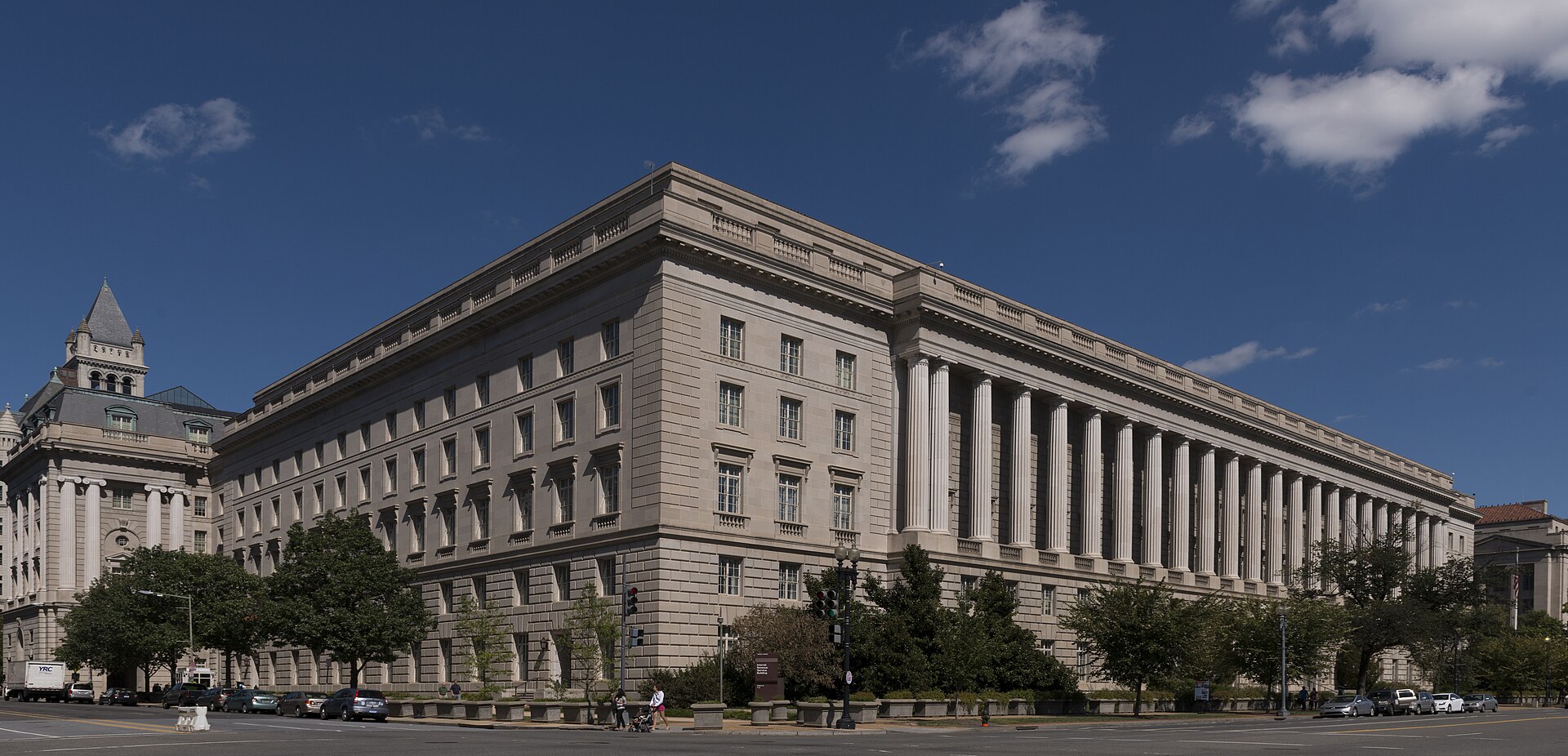
You claim the Saver’s Match on your tax return, the same way people claimed the Saver’s Credit. Here are the steps:
- Pick your account. Use your workplace plan if it accepts the match, or open an IRA that does.
- Save for 2027. Put money into your 401(k), 403(b), 457(b), or IRA. Even small amounts count.
- Keep your records. Save your year-end account statements and your Form W-2. Box 12 of your W-2 shows what you put into a workplace plan.
- File your 2027 tax return in 2028. Attach the new Form 8880-A. It asks for your income, filing status, contributions, and any withdrawals.
- Tell the IRS where to send the match. For an IRA, the proposed rules call for a tracking number from your IRA provider, entered on Form 8880-A.
- Get your deposit. The Treasury sends the match to your account after you file.
Form 8880-A is new, and the IRS has not released it yet. These steps come from proposed guidance, so a few details may change before tax season 2028.
One more thing: you have to file a tax return to get the match. Some low-income workers skip filing because they earn under the filing limit. If that’s you, filing for 2027 could put up to $1,000 into your retirement account.
Key takeaway: No tax return, no match. File your 2027 return with Form 8880-A, even if you don’t normally have to file.
What happens if you take money out early?
The Saver’s Match is meant for retirement. Taking money out of your retirement accounts can shrink your match or cost you extra tax.
First, withdrawals reduce the savings that count toward your match. The IRS looks at a testing period that covers the tax year, the two years before it, and the time up to your filing deadline. Say you saved $2,000 but took out $1,400 during that time. Only $600 would count toward the match.
Second, money you take out before age 59½ may face a 10% additional tax on top of regular income tax. The match is not taxed when it goes in, but it is taxed when it comes out.
Third, the proposed rules add a new Saver’s Match recovery tax in some early withdrawal cases.
Key takeaway: Leave the money alone. Early withdrawals can shrink your match and add a 10% tax.
Got a CP321J letter from the IRS? Here’s what it means
This fall, the IRS began mailing Notice CP321J. It goes to people who claimed the Saver’s Credit on their 2025 return, or whose 2025 income falls in the Saver’s Match range.
This letter is good news, not a bill. You don’t need to call the IRS or send anything back. It’s a heads-up that you may qualify for the match, starting with money you save in 2027.
The IRS simply asks you to keep saving in your retirement plan or IRA, or open one if you don’t have one. Keep the letter with your tax papers.
A word of caution: scammers love new government programs. The real CP321J comes by mail. Be careful with any text, email, or phone call that asks for your bank details or Social Security number to unlock your match.
What should you do now to get ready?
You have a few months before the first Saver’s Match year begins. Here’s a simple checklist:
- Claim the Saver’s Credit on your 2026 return if you saved this year and your income qualifies.
- Estimate your 2027 income to see if you land in the full, partial, or no-match range.
- Ask your employer if your workplace plan will accept the Saver’s Match.
- Open a traditional IRA if you have no workplace plan, or if your plan won’t take the match.
- Set up automatic savings, even $20 a month, starting in January 2027.
- Check TrumpIRA.gov after January 1, 2027, for low-cost IRAs that accept the match.
- Bring your retirement statements to your tax appointment so nothing gets missed.
The Saver’s Match is one of the easiest ways for working families to grow their retirement savings. A little planning now makes sure you don’t leave free money on the table.
Saver’s Match FAQ
It starts with money you save for tax year 2027. You claim it on your 2027 tax return, which you file in 2028. The Treasury deposits the match after that.
No. Unlike the old Saver’s Credit, the Saver’s Match does not depend on your tax bill. You can get the full match even if you owe no federal income tax, as long as you file a return and meet the income limits.
Not when it goes into your account. You pay income tax when you take it out in retirement, just like other pre-tax savings. Under the proposed rules, a match moved into a Roth IRA is taxed as a Roth conversion.
No. The Saver’s Credit is nonrefundable, so it can only lower the tax you owe. That is one reason the Saver’s Match is replacing it for retirement savings starting in 2027.
Form 8880-A is the new IRS form you will use to claim the Saver’s Match. You file it with your 2027 tax return. The IRS has not released the final form yet.
TrumpIRA.gov is a Treasury website set to launch on January 1, 2027. It will list low-cost IRAs that accept Saver’s Match contributions, to help workers without a workplace plan find an account.
Get ready for the Saver’s Match with Moon Valley

Moon Valley Accounting & Tax Services helps Phoenix individuals, families, and small business owners plan ahead. Book a free consultation and we’ll check whether you qualify for the Saver’s Credit now and the Saver’s Match in 2027. You can also see all of our tax and bookkeeping services.
2726 W Thomas Road, Phoenix, AZ 85017. Open Monday to Friday, 9 AM to 5 PM Arizona time.
Sources
- IRS: Saver’s Match
- IRS: Understanding your CP321J notice
- IRS: IR-2026-89, Treasury and IRS announce proposed regulations on the Saver’s Match
- IRS: Internal Revenue Bulletin 2026-35 (Notice 2026-48)
- IRS: Retirement Savings Contributions Credit (Saver’s Credit)
- IRS: IR-2025-111, 2026 retirement plan limits and Saver’s Credit income limits
- 26 U.S.C. § 6433 (Saver’s Match)
- The White House: Fact sheet on TrumpIRA.gov (April 30, 2026)
- Center for Retirement Research at Boston College: The Saver’s Match could really help low- and middle-income workers
- The Pew Charitable Trusts: Federal Saver’s Match, coming in 2027, could boost automated retirement savings programs
This article is general information, not tax advice for your situation. Tax rules can change, so talk with a tax professional before you file.